One Project in 30 Days: How to Finally Finish Something (Free Planner)
Pick one project, work on it a little every day, and finish it in 30 days. A week-by-week plan, a 10-minute minimum, 20 project ideas, what research says about small wins, and a free printable planner.
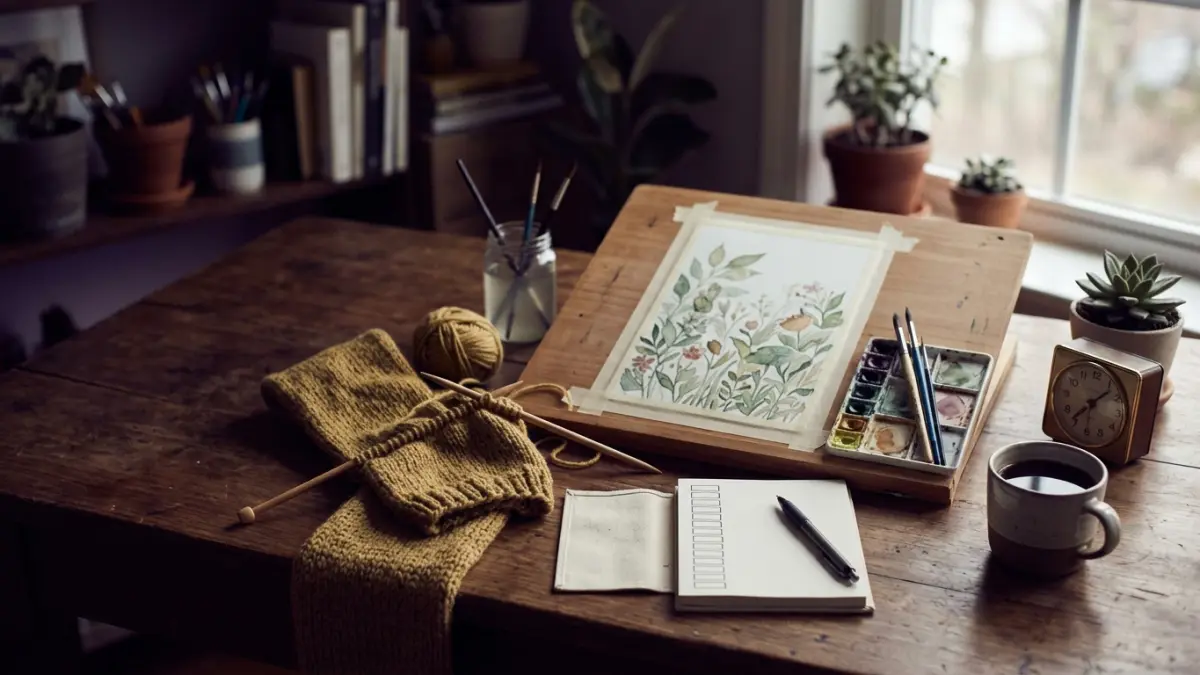
Table of Contents
Quick answer: "One project in 30 days" is a simple challenge: choose one project you can realistically finish in a month, decide exactly what "finished" means, and work on it a little every day for 30 days. Split it into four weekly stages: start, build, build, finish. On busy days, 10 minutes counts. New ideas go on a list, not into your month. On day 30, you show what you made, even if it isn't perfect. Free printable planner.
You probably have one. The half-written story. The painting that's been "almost done" since spring. The website, the photo album, the sweater with one sleeve, the course you bought and watched twice.
Starting is fun. Finishing is where most projects go quiet.
This challenge is the opposite of doing more. It's about doing one thing, slowly, until it's done.
Where the idea comes from: Slowvember
Every October, thousands of artists do Inktober: a fast ink drawing every day. In November, the illustration school SVSLearn suggested the opposite: Slowvember, with one idea: make one thing and make it beautiful. Instead of 30 quick pieces, you spend the whole month on one.
We loved the idea so much that we made it work for any project and any month: writing, music, crafts, code, a home project, a business plan. (If you're an artist, read about Slowvember and the other November art challenges.)
Why one project, and why daily?
Small progress feels good, and it keeps you going. Researchers Teresa Amabile and Steven Kramer studied nearly 12,000 daily diary entries from 238 people doing creative work. Of all the things that improved how people felt about their workday, the most important was making progress in meaningful work, even small progress. They called it the "progress principle". A little work every day gives you that feeling 30 times.
A plan for when and where helps you start. A large review of studies by Peter Gollwitzer and Paschal Sheeran found that people who make "if-then" plans ("When it's 7 am, I open my draft at the kitchen table") are more likely to reach their goals than people who only set the goal. The planner has a box for exactly this.
Daily work keeps the project warm. When you come back after two weeks, you have to remember where you were, what the problem was, what you wanted to do next. When you come back after one day, you just continue. That's why 15 minutes every day often beats 3 hours on a Sunday.
One project means you actually finish. Five projects at once means five unfinished projects. One project at a time is slower to start and much faster to finish.
How to choose your project
A good 30-day project is:
Finishable. Not "write a novel" but "write the first draft of a short story" or "the first three chapters".
Visible. On day 30 there's something you can show: a file, an object, a page, a link.
Yours. Something you want, not something you think you should want.
The scope test: imagine you can only work 20 minutes a day. Can you still finish it? If not, make it smaller. You can always do part two next month.
20 project ideas
| Creative | Practical | Learning | Personal |
|---|---|---|---|
| One finished painting or illustration | Build a simple website | Learn one song on guitar or piano | A family photo album or photo book |
| A short story or the first 3 chapters | Organise all your digital photos | A 30-day language project (one dialogue, learned by heart) | A recipe book of family dishes |
| A 12-page zine or comic | Repaint a room or a piece of furniture | Build a small app or tool | A letter to your future self, with photos |
| A knitted scarf, hat or sweater | A business plan or a pricing page | Finish the online course you started | A memory box for your child |
| A podcast episode or a short video | Clear and organise one storage space | A presentation on a topic you love | A garden or balcony makeover plan |
The 30-day plan: four weeks, four stages
| Week | Stage | What you do |
|---|---|---|
| Week 1 (days 1–7) | Start | Plan, references, research, a first rough version. Done is better than good. |
| Week 2 (days 8–14) | Build | The main part of the work. It's allowed to be messy. |
| Week 3 (days 15–21) | Build | Keep going. Find the biggest problem and fix it. |
| Week 4 (days 22–30) | Finish | Details, polish, and on day 30, share it. |
Week 3 is where most projects stop. The fun of starting is gone and the end isn't visible yet. Expect it. On those days, do the minimum and keep the project open.
The daily routine
1. Same time, same place. Write your "when and where" in the planner.
2. Choose your full day: 15, 30 or 60 minutes. Be honest about December, school holidays and work deadlines.
3. Set your minimum: 10 minutes. Open the file, do one small thing, close it. It counts as a full day. In the planner, the Minimum circle is the same size as the Full one.
4. Write one line about what you did today. On day 30 those 30 lines are your story.
5. Stop while you still know the next step. Leave a note for tomorrow: "Next: fix the ending" or "Next: sleeve number two."
Three rules
1. One project until day 30. New ideas are a good sign, but they go on a list, not into this month.
2. The minimum counts as a full day. Ten minutes keep the project alive.
3. Finished beats perfect. On day 30 you share it. You can make version two later.
Missed a day? Don't try to catch up with a double session. Come back with the minimum. Miss once, never twice. (More on this in how to build consistency.)
When you get stuck
You don't know what to do next: make the next step smaller. Not "write chapter 2" but "write the first sentence of chapter 2".
You hate it: that's normal in week 3. Keep going to the finish; judge it on day 31.
A new, better idea appears: write it down. If it's still exciting on day 31, it's your next project.
Life gets busy: switch to the minimum for a few days. The finish line stays the same.
It's going to take longer: cut the scope, not the finish line. Finish a smaller version.
Want more time per day? Try 3-3-3
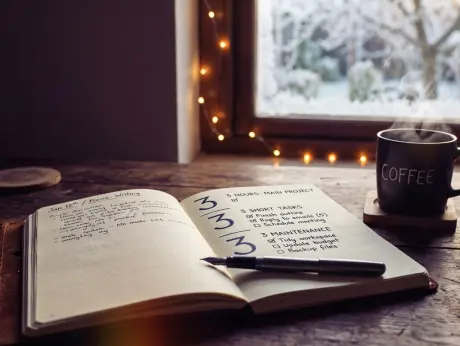
If your project is big (a thesis, a book, a business), the 3-3-3 rule protects three hours a day for your most important project. Use the 3-3-3 planner for your days and this planner for the whole month.
When to start
Any day works: the planner has no dates. Some good moments:
January 1: a fresh start with a real finish line. See all the January challenges for 2027.
The first of any month: easy to count.
November: do it as Slowvember with other artists.
December: a slow, calm alternative to busy daily challenges. See our December art challenges.
Free printable: One Project in 30 Days
Two pages, free, no signup:
Page 1, the setup: your project, what "finished" means, start and finish dates, four weekly stages, when and where, daily time, your minimum, what you'll say no to, where you'll share it, and the three rules.
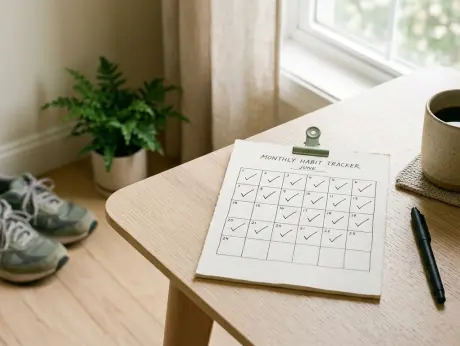
Page 2, the 30 days: a box for each day with "Today I…" lines and Full and Minimum circles, four weekly check-ins and a finish line box.
Do your project with proof on Harder
On Harder, now on iOS and the web, you can create your own 30-day project challenge, write your own steps and your minimum, and add a photo of today's progress as proof. Invite a friend to do their own project alongside you. On day 30, share your finished challenge with every day you showed up.
FAQ
What is "one project in 30 days"? A challenge where you choose one project, define what finished means, and work on it a little every day for 30 days, then share the result.
What is Slowvember? A November art challenge suggested by the illustration school SVSLearn: instead of a drawing every day, you spend the whole month making one piece you're proud of.
How much time do I need each day? 15–60 minutes on a full day, and 10 minutes as the minimum. The key is working on it every day, not for a long time.
What if my project takes longer than 30 days? Make the 30-day version smaller (for example, the first draft or the first three chapters). Finish that, then plan part two.
Can I work on two projects at once? We don't recommend it. One project is how you finish. Write the second idea down and start it on day 31.
What if I miss a day? Come back the next day with the minimum. Don't try to make up for it with a double session.
What counts as "finished"? Whatever you wrote in the "Finished means…" box before day 1. Something you can show: a file, an object, a link, a page.
Key takeaways
One project, 30 days, a little every day.
Decide what "finished" means before you start, and make it small enough.
Four stages: start, build, build, finish. Expect week 3 to be hard.
10 minutes counts. New ideas go on a list.
Research on small wins shows that daily progress on meaningful work is one of the strongest motivators.
Finished beats perfect. Share it on day 30.
Sources
Amabile, T. M., & Kramer, S. J. (2011). The power of small wins. Harvard Business Review, 89(5), 70–80.
Gollwitzer, P. M., & Sheeran, P. (2006). Implementation intentions and goal achievement: A meta-analysis of effects and processes. Advances in Experimental Social Psychology, 38, 69–119.
SVSLearn. Slowvember.