
75 Hard Changed How I Think About Challenges. Here's What It Got Right - and What It Got Wrong.
75 Hard is the most successful challenge program of the last decade. Here's an honest take on where it works, where it breaks, and what comes next.

75 Hard is the most successful challenge program of the last decade. Here's an honest take on where it works, where it breaks, and what comes next.

Missing one day on a habit shouldn't feel catastrophic. For adults with ADHD and RSD, it often does. Here's why - and what a better system looks like.
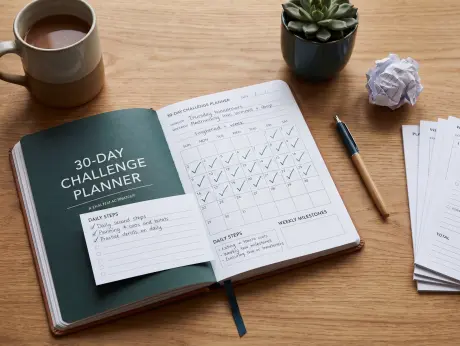
Most 30-day challenge dropouts happen in days 3–7, not at the end. Here's the design logic that makes a challenge survivable – plus the Harder checklist to run before day one.

Body doubling isn't a hack - it's neuroscience. Here's why working alongside others (even strangers, even virtually) changes how your brain performs.

Doing something privately and doing it where others can see you are psychologically different acts. Here's the science behind public accountability — and why it might be the missing piece in your habit practice.

Waiting until you feel motivated is the reason most people never build real discipline. Here's a different approach — one based on proof, public commitment, and showing up on the days you really don't want to.

Everyone says it takes 21 days to build a habit. The truth is more complicated — and more useful. Here's what research actually tells us about challenge length, habit formation, and why 21 days still works.

I tested 7 habit tracking apps for 30 days each: Habitica, Streaks, Fabulous, Beeminder and more. Honest verdicts, what all of them miss, and a habit tracker alternative for when streak apps fail.

If you have ADHD and can't stick to habit apps, you're not lazy — the apps are broken. Here's the neuroscience behind why, and what a different approach looks like.